


Almost all men perceive urological diseases as terrible discomfort, monotony and inability to normally continue their personal life.Many people think about how to treat prostatitis, but not everyone decides to quickly bring this problem "to the people" and share life news even with a doctor.
Before secretly accessing information on the Internet or asking close friends, remember that prostatitis is an individual disease and therefore requires careful and delicate treatment.One should not think that such a male problem is inherent only in asocial people who do not lead a very cultured life, or in those who have lost count of their "sexual victories".
Some infectious types of prostatitis:
- Bacterial.The reason for the appearance of this type of infectious prostatitis is the active effect on the body of bacteria: Escherichia coli, staphylococcus, Pseudomonas aeruginosa and streptococcus.These microorganisms can enter the prostate directly or from other organs through the blood or lymph.
- Viral.The reason for this is the activation of cytomegalovirus, herpes virus and human papillomavirus, which can threaten not only the prostate, but also other organs.
- Mycoplasma.They are caused by intracellular organisms - mycoplasmas, which also contribute to other inflammations of the genitourinary system.
- Trichomonas.It is caused by the Trichomonas protozoan in humans.
- Gonorrhea.This type of pathogen, gonococcus, can also cause prostatitis at any age.
- Chlamydia.In men, this is the most common type and is caused by intracellular organisms – chlamydia.
- Tuberculous.Koch's bacilli, present in the prostate, are most often transferred from other organs, which indicates a serious illness in a man with tuberculosis.
- Fungal.Most likely, this is non-infectious prostatitis, since it is caused by a person's microflora - Candida fungi, which are activated when the general immunity of the body decreases or due to the uncontrolled use of antibiotics.
- Mixed.The prostate is affected by two or more types of infections, but fortunately they are rarely recorded, because it is very difficult to completely cure this type of prostatitis.
What does medicine offer?
Treatment of prostatitis involves the process of eliminating inflammation or congestion in the prostate.This is correct, but it should be understood that successful treatment can be achieved only if the cause of its occurrence is eliminated.So how to properly treat prostatitis in men?
For treatment in a sanatorium, on an outpatient basis or in a hospital in the best clinic, it is always necessary to start with a diagnosis, identifying the cause of the male problem.It is necessary to determine, through a smear from the urethra, why the pain in the lower back, lower abdomen began and whether there is an infection or bacteria in the prostate.In case of infectious bacterial causes, antibiotic therapy is prescribed.Its timing in each specific case is individual and depends on the degree of infection in the body.
Prostatitis at age 25 most often occurs due to systematic hypothermia.In search of fashion, young men, from the transition period onwards, wear things that are “terribly beautiful” but not very warm (jeans).Therefore, in this case, antibiotic therapy will be necessary, but not so serious.
Stressors causing prostatitis should be treated by a neurologist.Electrophoresis, relaxing massages and vitamin therapy are most often prescribed.
Important!If the cause of prostatitis is not eliminated, any treatment method can be not only useless, but also dangerous.
Basic treatment regimen

Prostate disease is quite dangerous, therefore only a doctor should prescribe treatment.
How to treat prostatitis most effectively?The most commonly used methods are described below:
- Antibacterial drugs.They are only effective if the prostatitis is infectious in nature.
- Alpha-adrenergic blockers.They affect the smooth muscles of the prostate muscles, which promotes its rapid recovery.
- Hormonal agents.They help to quickly relieve hormonal imbalances in a man’s body.
- Muscle relaxers.Relieves tension in the striated muscles of the prostate.
- Herbal medicines.Made from medicinal plant components, they are used as adjuvants in the treatment of prostatitis.
- Physiotherapeutic methods.
- Popular folk remedies.
- Surgery.It is prescribed only when all of the above methods are ineffective.
Methods to combat the problem
Laser therapy, or laser treatment for prostatitis, is used for subacute and chronic forms of prostate disease.This helps increase the male body's defenses and heal acini.Before the procedure, the bladder must be partially filled.
For chronic prostatitis, the laser is often used in combination with medications.It is effective for severe forms of prostatitis that occur without pronounced symptoms.A man may feel improvement after the first round of laser procedures.
Indications for using the laser:
- congestive and bacterial forms of chronic prostatitis;
- urogenital infections;
- copulative dysfunction and interoreceptive infertility, identified as a result of prostatitis;
- neurovegetative prostatopathy and prostatitis with prostate adenoma;
- stricture of the urethra.
New in prostate treatment - a patch for prostatitis (see the link for detailed information!).The urological umbilical patch, made in China according to a recipe dating back to ancient times, contains extracts of medicinal herbs (tincture of safflower, cinnamon, Asian plantain, girchevnik, two-toothed gem, dubious corydalis and Bornean camphor).
This complex has a strong stimulating effect on the prostate in boys from 19 years old and in men of mature age, increasing blood circulation and reducing inflammation.Its use effectively relieves pain in the scrotum and perineum, stops the development of edema and improves the process of urination.Of course, nonspecific prostatitis cannot be treated with a patch alone;additional antibiotic therapy will be necessary.
Chinese healers call it "a patch for real men" and are confident that this is how prostatitis is treated at home and it is possible to get rid of the disease in just a few months, since the therapeutic effect of a patch lasts at least 3 days.Some experts are somewhat skeptical of the statements of their Chinese colleagues and do not undertake to answer unequivocally whether prostatitis can be completely cured with just one patch.This question still remains open.
Antibiotic therapy for prostatitis
When an infection is detected, doctors prescribe medications to which certain microorganisms are sensitive.It should be borne in mind that not all antibiotics are able to penetrate the prostate tissue, which sometimes complicates the healing process.
If the infection is not completely eliminated, relapses of the disease are possible.
Groups of antibiotics for prostatitis:
- fluoroquinols;
- macrolides;
- cephalosporins (3rd generation);
- penicillin group;
- tetracycline.
The duration of treatment should last at least 4 to 8 weeks.Each medication is prescribed only by a doctor and only after examining the patient.
Alpha blockers can be treated when sphincter opening is impaired.It is necessary to promptly treat smooth muscle spasms so that the man can increase the rate of urination and reduce the pressure of urine on the bladder walls.The duration of treatment is at least 1.5-2 months.
Can prostatitis be cured with hormonal treatment?In their single use - no.They are effective only in combination with other procedures, helping to normalize hormonal levels in the body of men, thereby reducing the number of glands in the prostate tissues, which makes inflammation less intense.
Physiotherapeutic methods
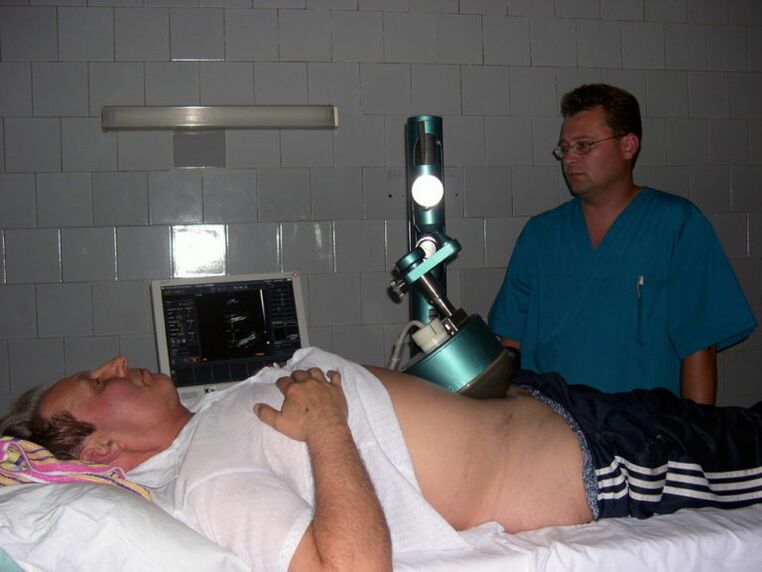
Physiotherapy can be an excellent complementary method in the fight against the disease.
Physiotherapy methods that can be used to treat the pathology include:
- directly massage the prostate;
- strengthening (relaxation) of the pelvic muscles;
- impact on trigger points (myofascial triggers);
- acupuncture;
- neuromodulatory treatment.
Shouldn't we take a leech?
The method of treating prostatitis with leeches has seen a renaissance these days.To treat prostate disease with hirudotherapy, you will need the knowledge and good qualifications of a doctor.Leeches should not be placed on certain areas of the skin - on inflamed areas and where the skin is too thin, there is a risk of prolonged bleeding.
“Leeches” are placed on the anus for prostatitis in the “X” pattern, where the center of the letter is the anus and its ends are leeches.According to another scheme, leeches are attached on both sides of the middle seam of the perineum, stepping back 2 cm.Usually no more than 4 leeches are attached to one session, the whole course includes 4-5 days with obligatory breaks of about a week.
How was prostatitis treated among the population?
Men have always had problems with the prostate;Don’t think of it as a “disease of the 21st century.”How to determine prostatitis was known in ancient times.All traditional treatment methods can be combined with basic methods, as well as prevention in men at a young age.The most popular remedies are propolis, parsley, pumpkin seeds and red root.
Surgery
Prostatitis surgery is only indicated when it becomes vitally necessary.In other cases, doctors try to avoid surgery in such a delicate area.
The operation is prescribed only in certain cases:
- Urethral obstruction, when there is a stricture of the urethra.At the same time, it becomes impossible to go “little by little” and the only way out is surgical intervention.In most cases, phimosis is added to the obstruction, when it is difficult to open the head of the penis.
- Drainage of the prostate with its abscess.If pus accumulates in the prostate tissue, it is necessary to remove it and rinse the cavity.All manipulations are carried out using a special needle.
- Restoration of the seminal vesicles when they have lost their function as a result of inflammation, making it difficult to eliminate prostatic secretions.
- Partial or complete removal of the prostate.Necessary for sclerotic changes in the prostate or adenoma.It is prescribed only when all methods have not given positive results.
Exercise
Prostatitis can be cured through an integrated approach, including the use of simple sports exercises, since it is associated with congestion.It is necessary to increase the blood supply to the prostate and its oxygen supply.To do this, you need to perform a set of exercises that will increase blood flow to the muscles.
Useful :
- to walk;
- jogging;
- squat;
- abdominal exercises
The famous "birch" exercise can be easily practiced at home several times a day.
Massage
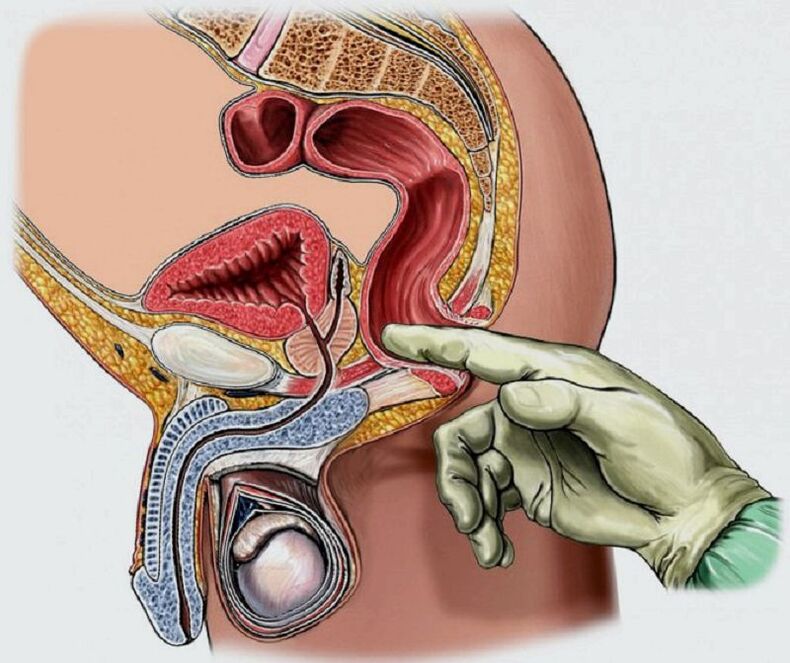
A combination of medications and prostate massage gives good results in treating the disease.
A method based on mechanical action on body tissues using hands or special devices.The essence of the procedure is that skin and muscle receptors perceive irritation and transmit it to the central nervous system.As a result, the tone of the central nervous system increases and, thanks to it, there is a positive effect on the activity of all physiological systems.
Precautions during treatment
Contraindications for prostatitis should be taken into account when choosing any treatment method.
- In the acute form, it is impossible to do an analysis of prostate secretions due to intense pain;In some men, this procedure can cause painful shock.You should not perform any physiotherapeutic interventions (massage, warming, etc.).
- You should absolutely not drink or smoke, as this will lead to impaired venous circulation and irritation of the prostate.Good nutrition is the key to a healthy prostate, so you should avoid soda, energy drinks, smoked foods, spicy and fatty foods.
- Massage is not performed for acute and bacterial forms of prostatitis, for malignant neoplasms of the prostate, for the presence of stones and for problems with urination.In addition, you should not massage if you suffer from hemorrhoids, proctitis, paraproctitis, adenoma and some diseases of the urinary system.
- With chronic prostatitis, you cannot carry out mud therapy, sunbathing or water procedures, which can lead to overheating or hypothermia of the body.
And finally, an equally important question: where to treat prostatitis?Only in a specialized clinic under the supervision of a doctor.Some procedures can be carried out at home, but they must be agreed with your doctor.Remember that a healthy prostate means comfort for a man, a calm intimate life for a family and strong offspring.